
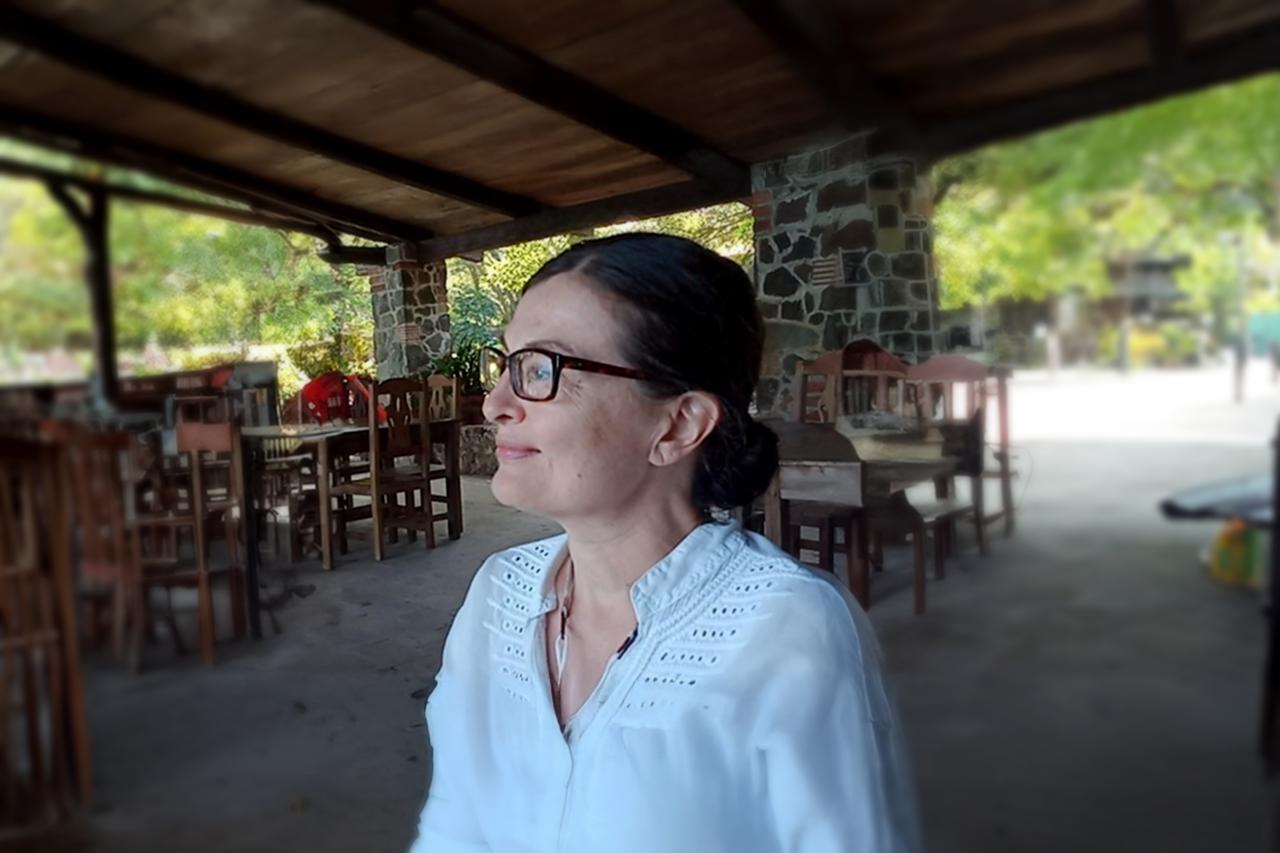
<p><span class="p-body">The <a href="/content/sps-nyu/explore/degrees-and-programs/ms-in-translation.html" target="_blank">MS in Translation and Interpreting</a> program invited Catherine Pizani, a professional translator who has been running a translation office for more than fifteen years, to speak with NYU SPS students on translating at the intersection of environmental justice and peacekeeping. Catherine majored in international negotiation and holds degrees in journalism and translation. A French national, she spent two years in California and twenty-three years in Mexico, recently relocating to the south of France from where she zoomed in to speak with our program’s online community. </span></p>
<p><span class="p-body">Catherine outlined the interrelation between peacekeeping and climate by giving various examples of how climate change, the degradation of ecosystems, and extreme weather events lead to social and political tensions over the distribution of limited resources. She reflected on when she started working in this area, a colleague involved in peacekeeping remarked that “almost everything is connected to climate change.” Catherine also highlighted the importance of translators in this specialization and explained that “by translating reports on the environment, you’ll definitely build bridges between different actors who need to be heard.” Catherine went on to share how all actors in the climate and peacekeeping fields, from global organizations such as the United Nations’ Intergovernmental Panel on Climate Change to individual researchers, are engaged in a dialogue. It is the role of the translator to support their conversation. </span></p>
<p><span class="p-body">For those considering a career on climate change, the environment, and peacekeeping translating, Catherine emphasized the importance of research. She explained that it is very important to attain a comprehensive understanding of both technical jargon and regional context. Due to differences in political environment, monetary resources, and the natural environment, global crises impact different regions and countries disparately. She recommends staying updated about a diverse range of scientific research, varying in both language and region, through sources ranging from newsletters to mass media coverage to traditional research journals. Catherine shared that “translating the environment is a beautiful commitment [in addition to] a political and social [one]” to explain how the considerable investment of time and energy to work in the field is returned through personal fulfillment. </span></p>
<p><span class="p-body">Catherine also shared the following general pointers for seeking translating work: </span></p>
<ul class="p-list">
<li><span class="p-body"><b style="font-size: 16.0px; letter-spacing: -0.32px;">Look Where No One Looks!</b>: Explore creative sources of work to find what area both best resonates with you and also offers a lot of room to grow.<br>
</span></li>
<li><span class="p-body"><b style="font-size: 16.0px; letter-spacing: -0.32px;">Do Your Homework</b>: Map out the actors in the field you are interested in to figure out the best avenues to pursue work. Your profile is telling a story.<br>
</span></li>
<li><span class="p-body"><b style="font-size: 16.0px; letter-spacing: -0.32px;">Market Yourself</b>: You are a consultant aiding the client in communicating their work! Learn from your peers and other professional translators how to best present yourself and your work. Self-marketing is storytelling, so it’s important to paint the picture of how you are the best option for your client. </span><br>
</li>
<li><span class="p-body"><b style="font-size: 16.0px; letter-spacing: -0.32px;">LinkedIn Is Important</b>: LinkedIn is a great way to market yourself to potential clients and to show them how you help them to thrive in their areas of expertise. When building your profile, it is important to be clear about your specialization: language and subject. Also, publish articles on LinkedIn in order to show to your readership that you update your knowledge on particular issues.<br>
</span></li>
<li><span class="p-body"><b style="font-size: 16.0px; letter-spacing: -0.32px;">Email Concisely</b>: Clients prefer emails that paint a clear picture with few words. Prioritize including only pertinent information.<br>
</span></li>
<li><span class="p-body"><b style="font-size: 16.0px; letter-spacing: -0.32px;">Negotiate Wisely</b>: Never lead with your rates. Ask questions on the project and understand the scope of the project and your role before setting a price. Do not forget to read the draft before setting prices!</span></li>
</ul>
<p><span class="p-body">Catherine’s talk was rich with information that clearly established the importance of environmental and peacekeeping translation. Perhaps the most stirring moment was when she called for the attendees to reconnect to the subject on a personal level. She recommended that everyone explore their connection to nature and the environment by not only reading classic books such as <i>Silent Spring</i> by Rachel Carson, but also “reading” the memories of their loved ones and theirselves. Through this self-exploration, she poses the question: as a translator or interpreter, what does the environment mean to you and how are you willing to work for it? </span></p>