
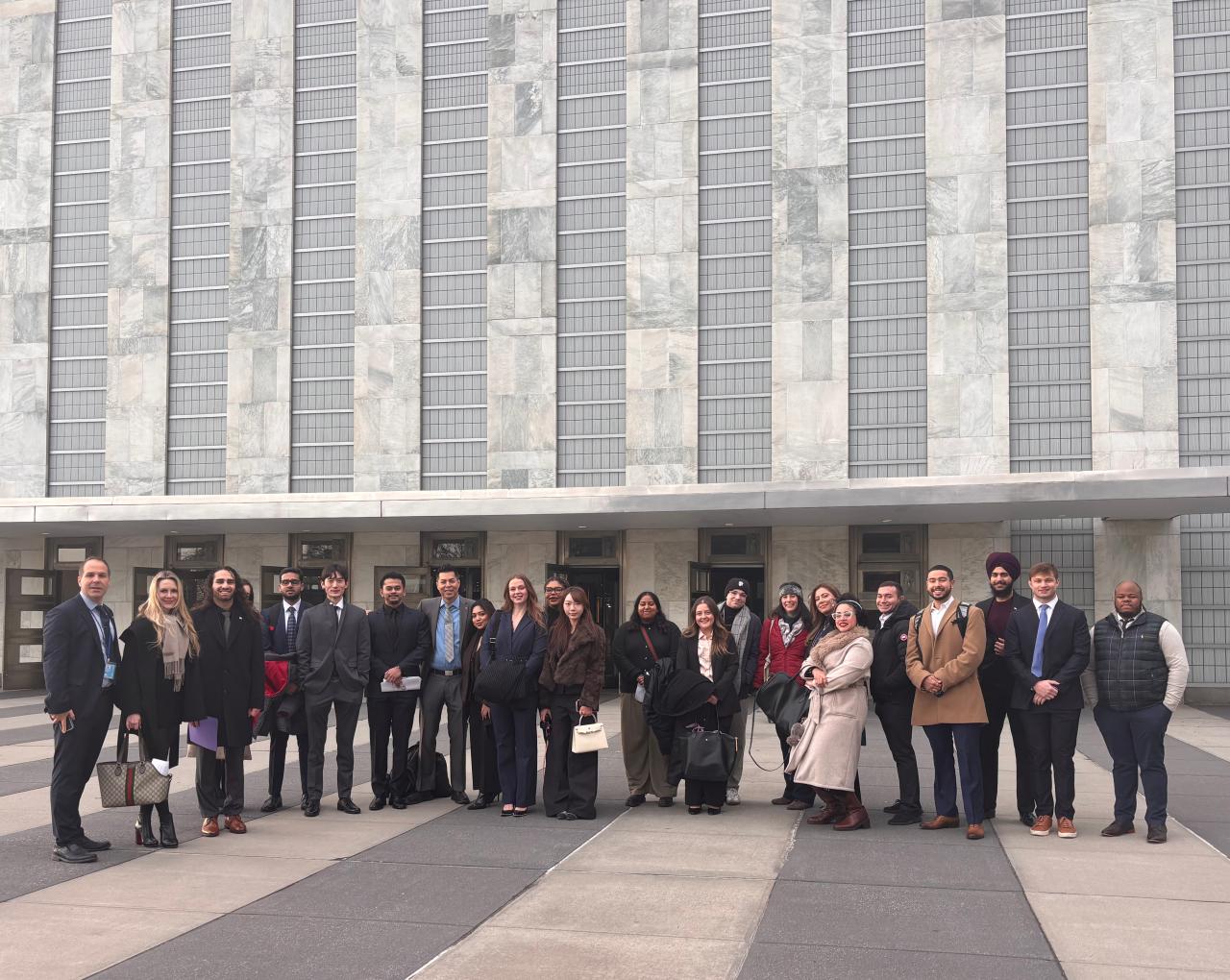
NYU Students Present Innovation Toolkits at UN Headquarters
<p>What if you could help design the future of work—with the United Nations? Students from NYU SPS recently turned that vision into reality, presenting their original digital innovation toolkits at <a href="https://www.un.org/en/">United Nations Headquarters</a> in New York City. This initiative, spearheaded by the <a href="https://www.sps.nyu.edu/about/academic-divisions-and-departments/division-of-applied-undergraduate-studies/workplace-learning-innovation-lab.html">SPS Workplace Learning Innovation Lab</a> in collaboration with the UN NewWork Innovation Team and global network, resulted in an impactful showcase that marked the culmination of a semester-long, professional studies project bridging academic research with global practice.</p>
<p>Funded through an <a href="https://www.nyu.edu/about/leadership-university-administration/office-of-the-president/office-of-the-provost.html?challenge=d06e90d7-4d8f-4b88-9d8c-10b73beb60f1">NYU Provost’s Office</a> Teaching Advancement Grant (TAG) and Student Activities Grant from the <a href="https://www.nyu.edu/faculty/teaching-and-learning-resources/center-for-teaching-and-learning.html?challenge=d06e90d7-4d8f-4b88-9d8c-10b73beb60f1">Center for Teaching and Learning</a>, the project fused AI development, faculty mentorship, and student research to create a suite of human-centered, research-informed digital toolkits designed to strengthen communication, empathy, change management, and innovation in global workplaces. The initiative reflects SPS’s core mission: connecting learning with practice through real-world engagement, interdisciplinary teamwork, and forward-looking design.</p>
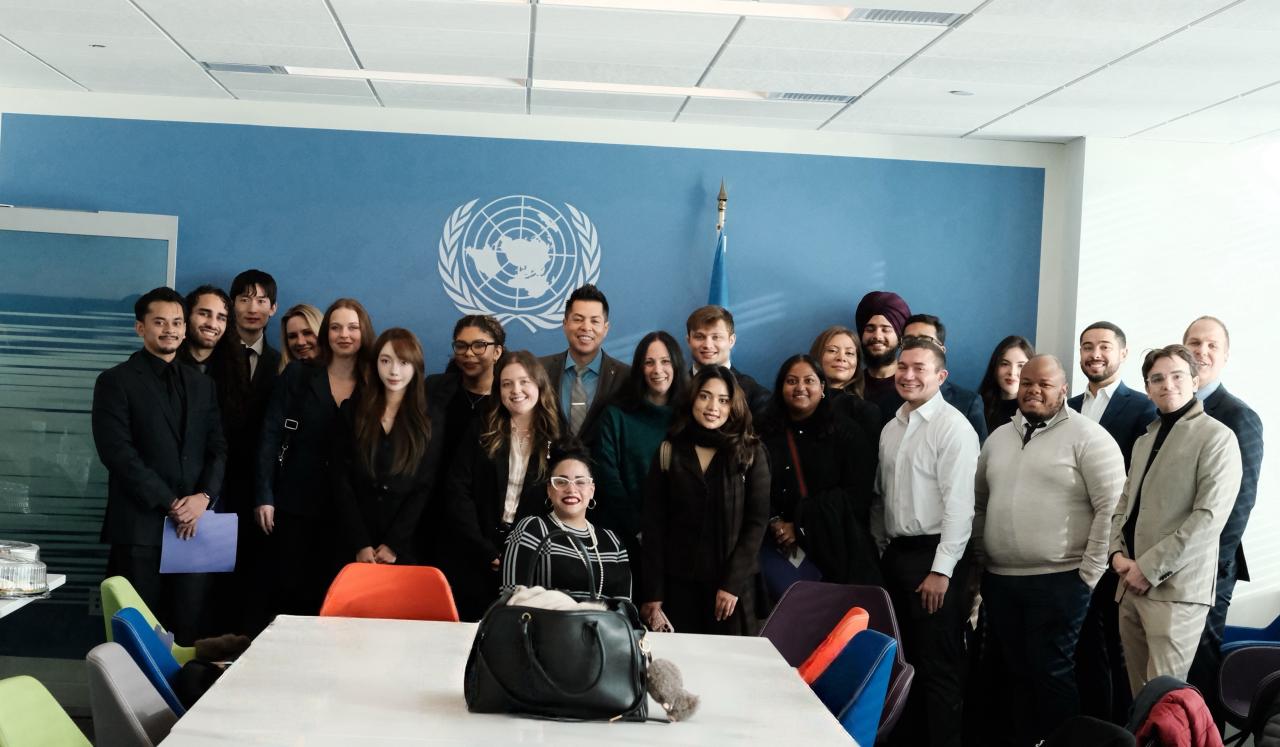
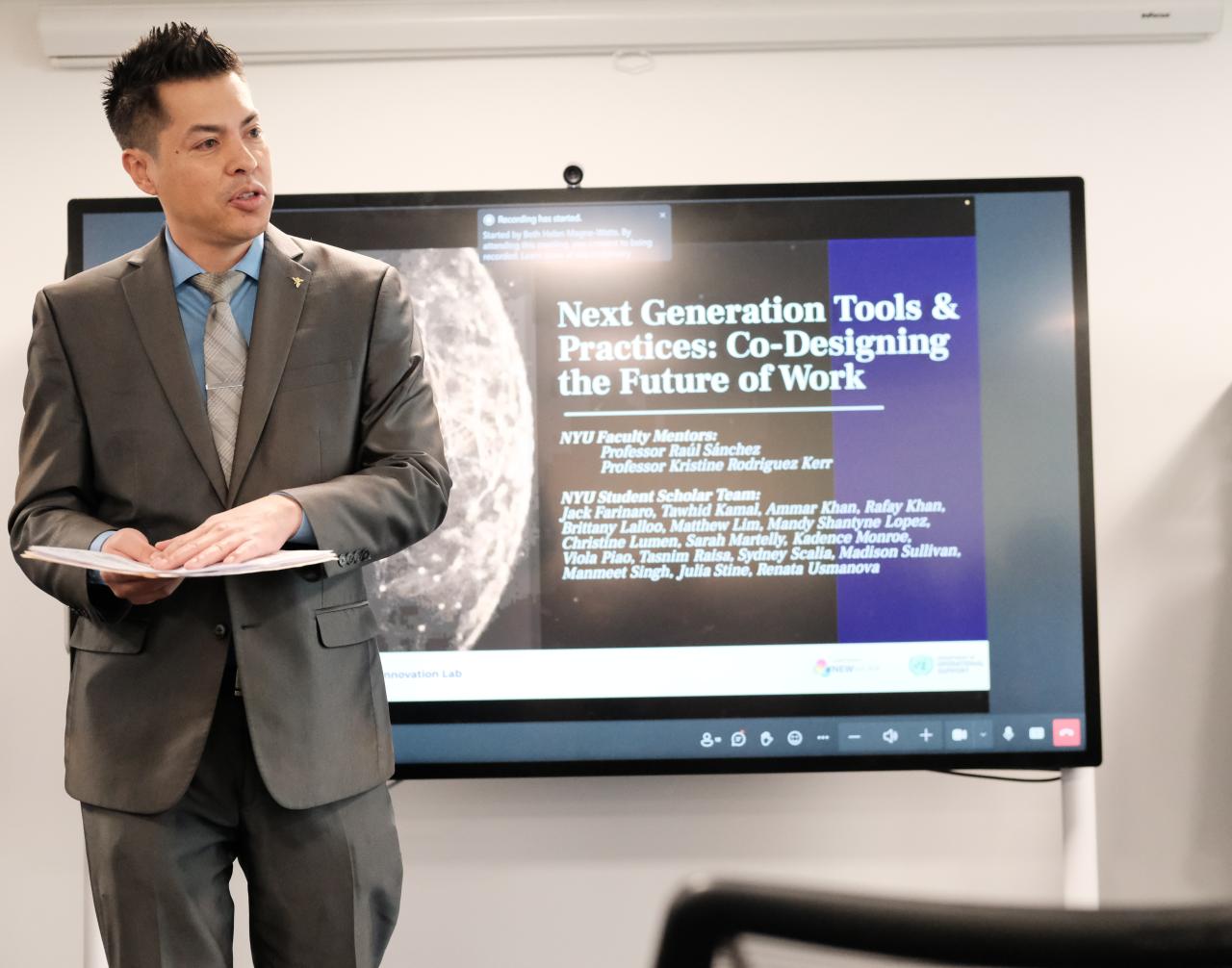
<p>The student presentations served as the capstone of the course <i>Organizational Behavior & Communication: The Future of Work with the UN</i>, taught by Professor Raúl Sánchez and offered through the <a href="https://www.sps.nyu.edu/about/academic-divisions-and-departments/division-of-applied-undergraduate-studies.html">Division of Applied Undergraduate Studies</a>. Interdisciplinary teams—spanning leadership, management, social sciences, and professional writing majors—researched, conceptualized, and tested interactive digital toolkit prototypes. The final in-person showcase invited “live” feedback from UN innovation leaders and more than 100 global participants joining virtually from all over the world.<br />
<br />
In a unique format modeling multigenerational collaboration in action, the project was a collaboration between DAUS undergraduate students and graduate students in the <a href="https://www.sps.nyu.edu/explore/degrees-and-programs/ms-in-professional-writing.html">MS in Professional Writing Program</a> (MSPW). The showcase also highlighted the extraordinary partnership with the UN NewWork Innovation Team, whose leadership has shaped the vision, scope, and global relevance of the project.</p>
Our students did an incredible job—when we adopt a multigenerational and international perspective, we ignite co-creativity and progress on a global scale.”
Professor Raúl Sánchez
Director of Partnerships, Workplace Learning Innovation Lab
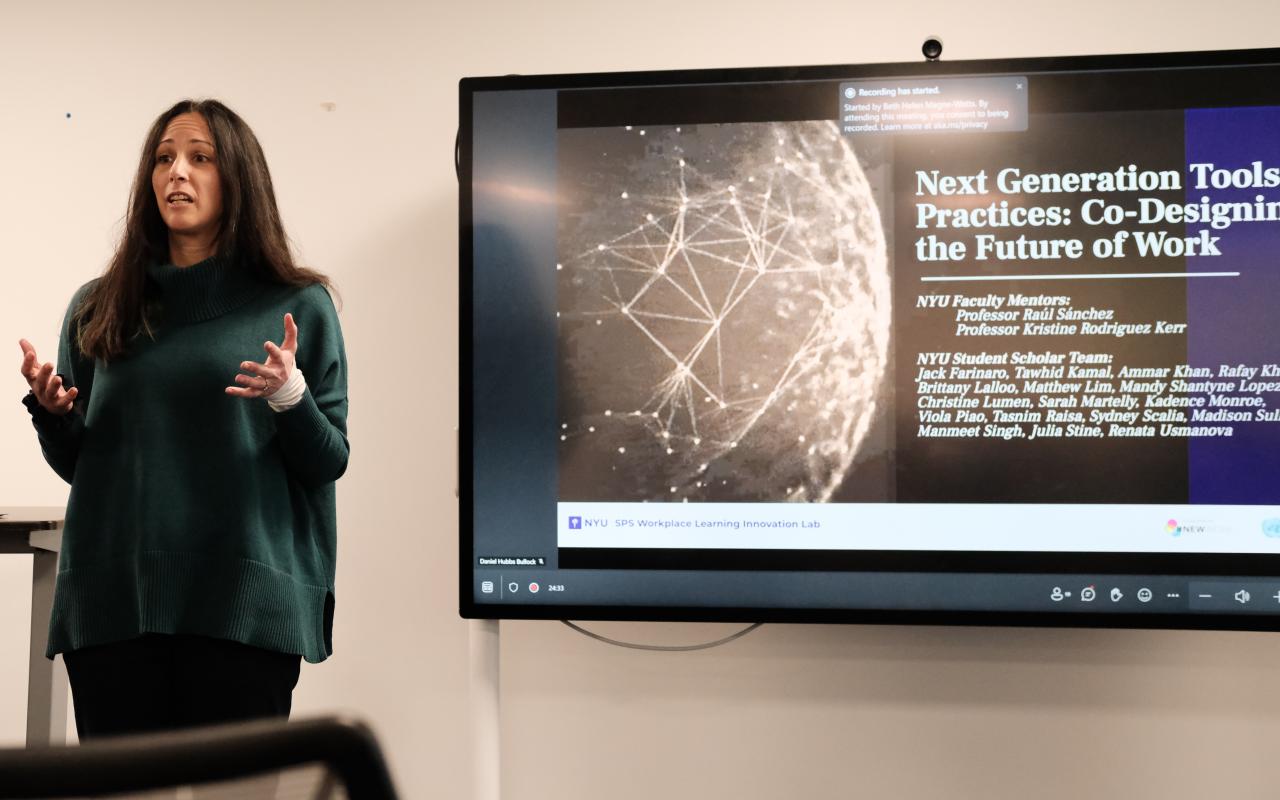
<p><a href="https://www.linkedin.com/in/danielbullock1/">Dan Bullock</a>, head of the communications programme at UN Headquarters, spoke to the importance of creating unified innovation infrastructures that strengthen communication and capacity development across global teams, describing the toolkits as part of a broader ecosystem of cross-functional learning and upskilling.<br />
<br />
<a href="https://www.linkedin.com/in/emagineitall">Liliana Uruburo</a>, innovation evangelist at UN NewWork, emphasized the power of creativity, imagination, and expansive thinking as core drivers of global problem-solving—echoing the project’s goal of encouraging students to think beyond the systems in which we operate. </p>
<p>The partnership exemplifies a model of co-created innovation, uniting academia and global institutions to design research-backed tools that advance tech-enhanced capacity-building initiatives across the UN system and global workforce at large.</p>
A Living Resource for Global Innovation
<p>Each toolkit is designed to be a living resource—adaptable to evolving needs, research-based, interactive, and AI-supported—epitomizing the project’s aim that technology does not diminish but amplifies human connection and creativity<br />
<br />
One participant, Ammar Khan reflected, “It was incredible to hear how timely our ideas were—helping organizations in this new phase of technological development where we want technology not to replace human creativity, but to empower it.”</p>
<p>NYU SPS students contributed to four UN Future of Work innovation areas—Innovation Communication, Change Management, Multilingual Communication & Global Collaboration, and Human-Centered Storytelling. Student contributors to the project were: Julia Stine, Ammar Khan, Sarah Martelly, Tasnim Raisa, Brittany Lalloo, Christine Lumen, Tawhid Kamal, Kay Monroe, Sydney Scalia, Matthew Lim, Viola Piao, Rafay Khan, Renata Usmanova, Mandy Shantyne Lopez, Manmeet Singh, Jack Farinaro, and Madison Sullivan.</p>
<p>As crystalized by this project, the Workplace Learning Innovation Lab serves as both incubator and research hub for faculty-student-industry initiatives. With the lab’s mission of designing applied, research-backed tools that advance the future of learning and work aligned with the UN NewWork vision for an agile and innovative global workforce, the collaboration is poised to make further impact on the world stage.</p>
It’s a joy to support these interdisciplinary teams where graduate and undergraduate students co-create human-centered, research-driven toolkits that address real-world organizational challenges.”
Professor Kristine Rodríguez Kerr
Faculty Co-lead & Director of the MSPW Program
A Look Ahead
<p>As the partnership continues, the NYU Workplace Learning Innovation Lab and larger UN Innovation Team will further explore key co-research areas for reimagining communication, collaboration, and innovation for measurable impact on a global scale.</p>
<p>Ultimately, this initiative showcases what happens when higher education and global institutions unite to transform ideas into action. <i>The Designing the Future of Work with the United Nations</i> course exemplifies NYU SPS’s commitment to experiential learning and global partnership—where research meets practice and students become architects of the future workplace.</p>