<p><span class="p-body">The NYU SPS Capstone Competition is an annual spring tradition that celebrates the creativity, innovation, and hard work of our graduate students as they present their final capstone projects from across the School. The event offers the opportunity for students, faculty, alumni, and guests to connect, network, and explore an inspiring showcase of ideas while enjoying complimentary food and refreshments. This year's Capstone Competition featured a series of projects that most embodied SPS's innovative spirit.</span></p>
<p><span class="p-body">We wanted to take a moment to recognize the incredible creativity, innovation, and entrepreneurial attitude displayed by our students in last week’s Capstone Competition. To all of the students who participated: congratulations on your outstanding work! Your capstone projects showcased not only your knowledge and skills, but also your ability to collaborate, solve real-world problems, and innovate with purpose. You have made the entire SPS community proud.</span></p>
<p><span class="p-body">A special congratulations goes to this year’s SPS Spring 2026 Capstone Competition winners, whose projects stood out for their ingenuity and potential to create meaningful impact in the world. Your success is a powerful reflection of what is possible when vision and dedication come together.</span></p>
Winners
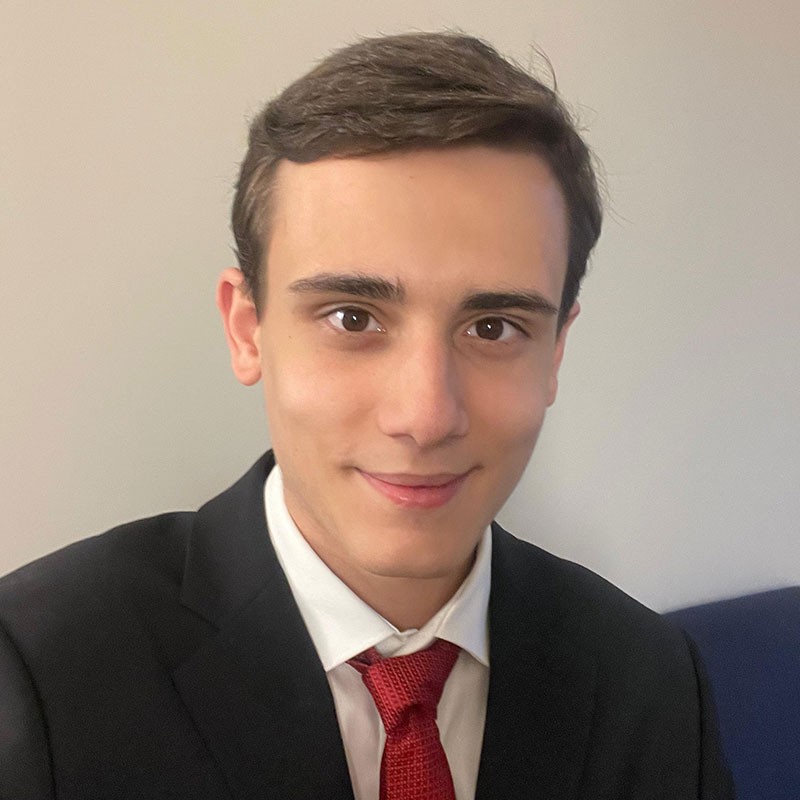
<p><span class="p-body"><span class="p-body-large"><span class="p-body-large-bold">Whitney Alleng</span></span><br />
<span class="p-body-large">MS in Management and Systems</span></span></p>
<p><span class="p-body"><b>Project Name: </b>ClinIQ- Caseload Management</span></p>
<p><b>Project Description:<br />
</b>ClinIQ: AI-Powered Clinical Caseload Management for Dental Education</p>
<p>Pre-doctoral dental students at NYU College of Dentistry are responsible for managing active patient caseloads, tracking graduation requirements across twelve clinical disciplines, and coordinating care with supervising faculty. All of this happens without a dedicated tool to support them. The result is students relying on phone notes, manual spreadsheets, and memory to manage what is effectively a healthcare practice while simultaneously completing their clinical education.</p>
<p>ClinIQ is an AI-powered clinical caseload management platform built to solve this problem. Developed in partnership with Associate Dean John D. McIntosh of NYU College of Dentistry, ClinIQ gives dental students a real-time command center for their patient panel. Core features include an AI chat assistant with full caseload awareness, natural language visit logging, a live graduation requirement tracker, pre-authorization and lab status monitoring, a unified notification system, and a paired provider coordination model for D3 and D4 students. The application is live at https://clinic-iq.replit.app and accessible on any device.</p>
<p><b>Capstone Course Name: </b>Applied Technical Project MASY1-GC 4115 103 (3)</p>

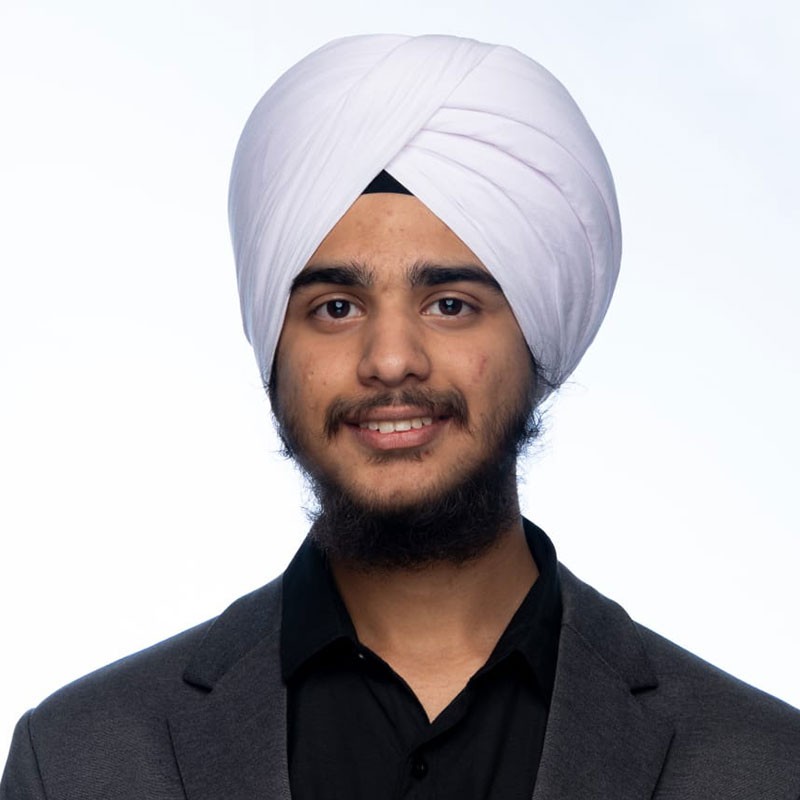
<p><span class="p-body"><span class="p-body-large"><span class="p-body-large-bold">Manmeet Singh</span><br />
BS in Leadership and Management Studies</span></span></p>
<p><span class="p-body"><b>Project Name: </b>SignalScope</span></p>
<p><span class="p-body"><b>Project Description:<br />
</b>AI-Powered Foresight and Scenario Mapping for Global Institutional Communications</span></p>
<p><span class="p-body">SignalScope is a free, browser-based AI foresight tool that helps UN communications teams detect emerging workplace communication challenges, map future scenarios, and generate actionable response strategies before issues escalate. It integrates the STEEP framework (Social, Technological, Economic, Environmental, Political) with generative AI, requiring no installation, subscription, or technical expertise.</span></p>
<p><span class="p-body">Multilingual communication barriers are among the most persistent challenges within global institutions. At the United Nations, non-English-speaking staff report reduced confidence in digital meetings, AI translation tools introduce cultural blind spots, and asynchronous communication creates context gaps across time zones. No structured system currently exists to monitor these barriers proactively or respond to them before they affect institutional decision- making.</span></p>
<p><span class="p-body"><b style="">Capstone Course Name: </b>WILN Organization</span></p>
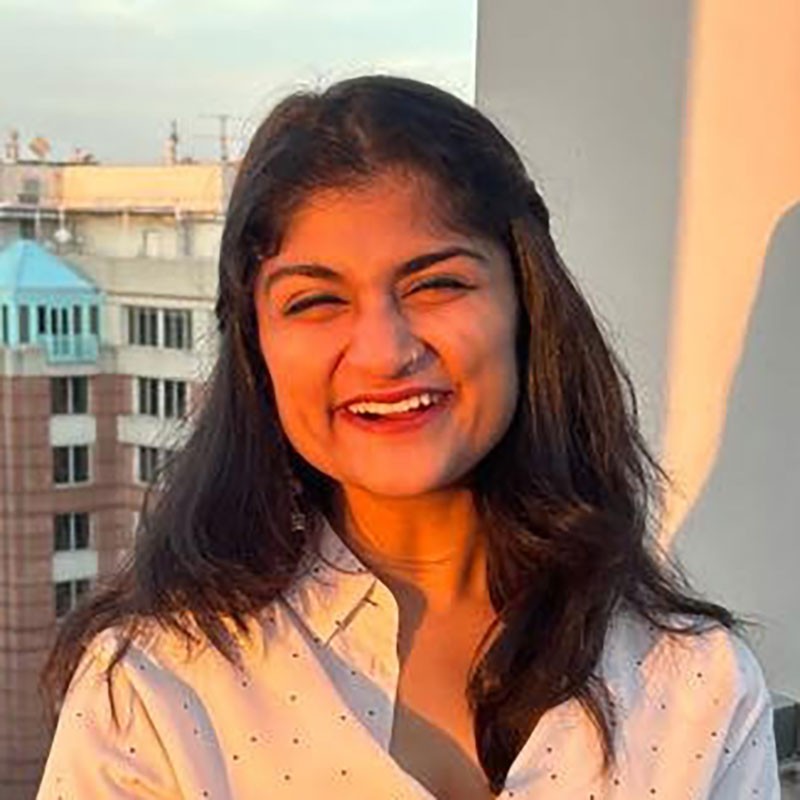
<p><span class="p-body"><span class="p-body-large"><span class="p-body-large-bold">Maahi Gupta</span><br />
MS in Global Affairs</span></span></p>
<p><span class="p-body"><b>Project Name: </b>Disciplining God: The Meaning of Sovereignty</span></p>
<p><span class="p-body"><b>Project Description:<br />
</b>The contemporary understanding of sovereignty, institutionalized through the United Nations and grounded in the Westphalian model, treats sovereignty as an intrinsic, territorially bounded property of the state. This thesis argues that such a definition is not only incomplete but also incapable of describing how sovereignty actually operates. Drawing on Samuel von Pufendorf and on the critical tradition running through Hannah Arendt, Bruno Latour, Michel Foucault, Pierre Bourdieu, and R. B. J. Walker, this thesis shows that the Westphalian model hides the relational and continuous processes through which sovereignty is produced.</span></p>
<p><span class="p-body">I propose a new definition. It shifts sovereignty from a static property to a relational process, constituted through networks of recognition and contestation rather than inherent state attributes. Second, it expands the category of sovereign actors beyond the territorial state to include non-state organizing bodies such as technology corporations, armed groups, and transnational institutions. Third, it emphasizes the symbolic dimension of sovereignty through the governance of myth, narrative, and collective identity and as structurally inseparable from the control of material conditions.</span></p>
<p><span class="p-body"><b>Capstone Course Name: </b>GLOB1-GC3900</span></p>
<p><span class="p-body"><span class="p-body-large"><span class="p-body-large-bold">Rafael Cruvinel</span><br />
MS in Publishing: Digital and Print Media</span></span></p>
<p><span class="p-body"><b>Project Name: </b>Scholastic Translations: Bringing the World to Kids</span></p>
<p><span class="p-body"><b>Project Description:<br />
</b>Scholastic Translations will be a new imprint of Scholastic focused on translations of picture books from other languages into English. The goal of the imprint will be to bring literature from other parts of the world to kids, hence the slogan “Bringing the World to Kids.” In a globalized society, it’s pivotal that children consume culture that comes from outside English-speaking countries, and language shouldn’t be a barrier for that.</span></p>
<p><span class="p-body"><b>Capstone Course Name: </b>Capstone Thesis</span></p>