
Overview
The Building Better Cities Collaborative (BBCC) is a new fellowship at NYU’s Schack Institute of Real Estate for mid-career professionals from across the built environment. Its purpose is to pioneer proposals for making cities more sustainable, equitable, and prosperous.
The one-day-per-week hybrid program integrates leadership development, collaborative R&D, and market positioning—expanding capacity and networks, innovating with industry and academia, and opening new professional opportunities.
Launched in February 2026, BBCC is running a pilot program in New York across the Spring and Summer Semesters, with a full founding program in the Fall Semester from September 2026 in New York and London. To participate in either, please email w.hunter@nyu.edu.
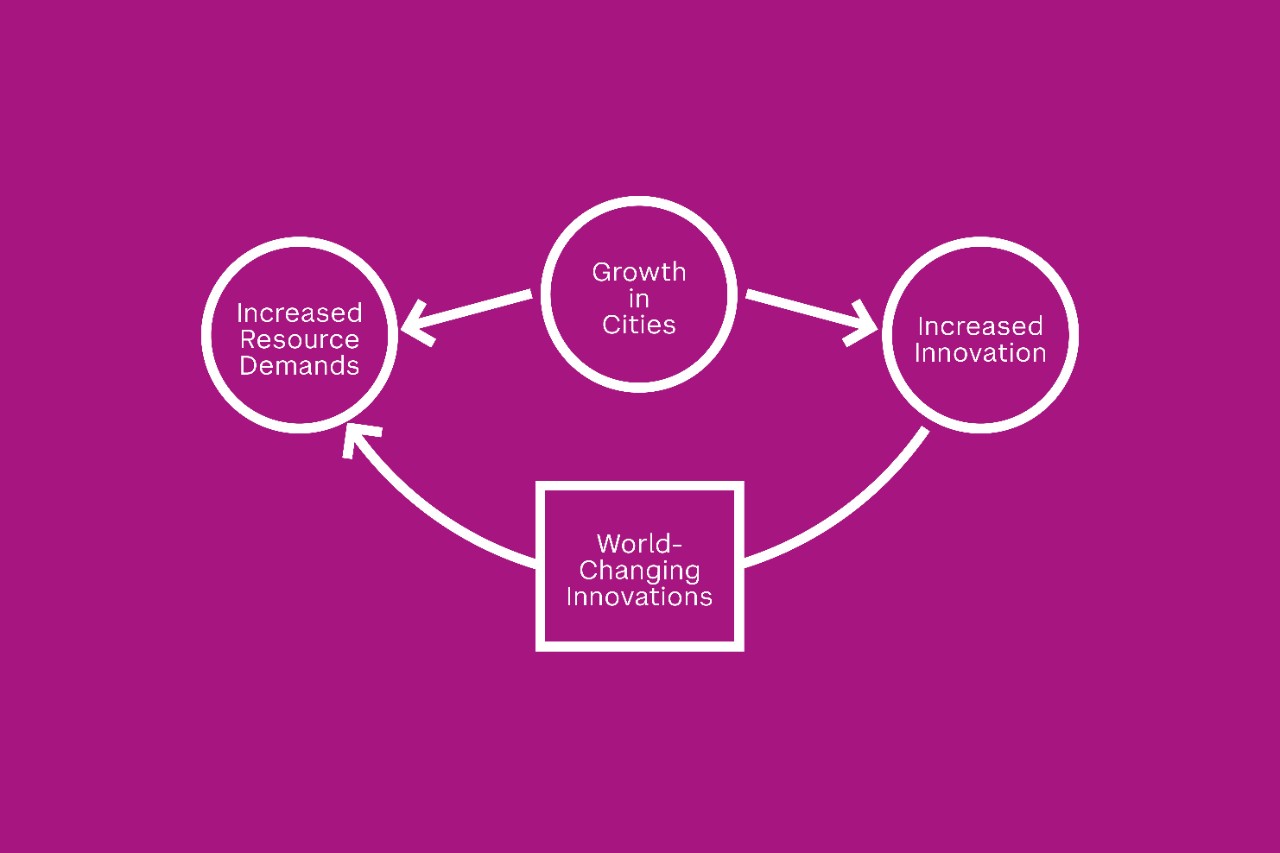
Caption: Geoffrey West argues that “world-changing innovations will need to happen more and more rapidly” to mitigate accelerating urbanization.
Problem
Cities are where most of the world now lives, and where many of its biggest challenges converge. By mid-century, nearly three-quarters of humanity will be urban.
As cities grow, they generate opportunity, wealth, and innovation at remarkable scale. But growth also intensifies pressure on housing, infrastructure, energy, land, and public services—pressures that interact, compound, and accelerate. As physicist Geoffrey West has shown, cities grow “super-exponentially,” meaning their resource demands will eventually outpace any fixed solution. Keeping pace requires continual innovation, not one-off answers.
Yet most responses remain fragmented. Design, development, finance, policy, technology, and community action operate as separate domains. Universities reward specialization; industry optimizes for short-term delivery. Interconnected problems are met with disconnected expertise.
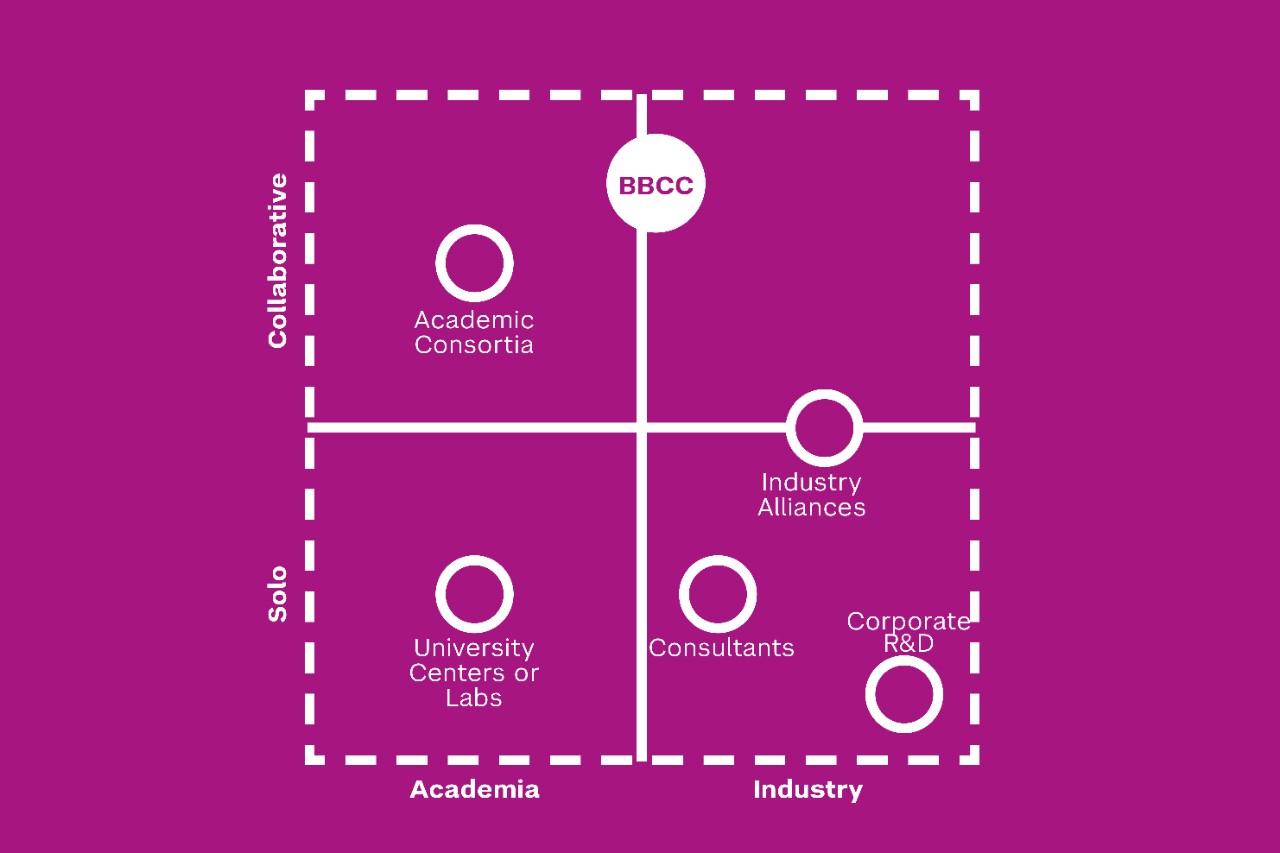
Caption: BBCC unites academia with industry and adds value by being collaborative.
Opportunity
We are living through a period of profound transition. Climate risk, housing shortages, demographic shifts, and rapid technological change are reshaping cities faster than existing models can respond.
At the same time, emerging tools—from AI and urban data platforms to new financial instruments—are making connections between urban systems more visible. They create new possibilities for working across disciplines that have traditionally operated in parallel.
As older approaches reach their limits, there is space for a different kind of practice: one that treats cities as complex, interdependent systems and recognizes that meaningful change depends on coordination and shared inquiry.
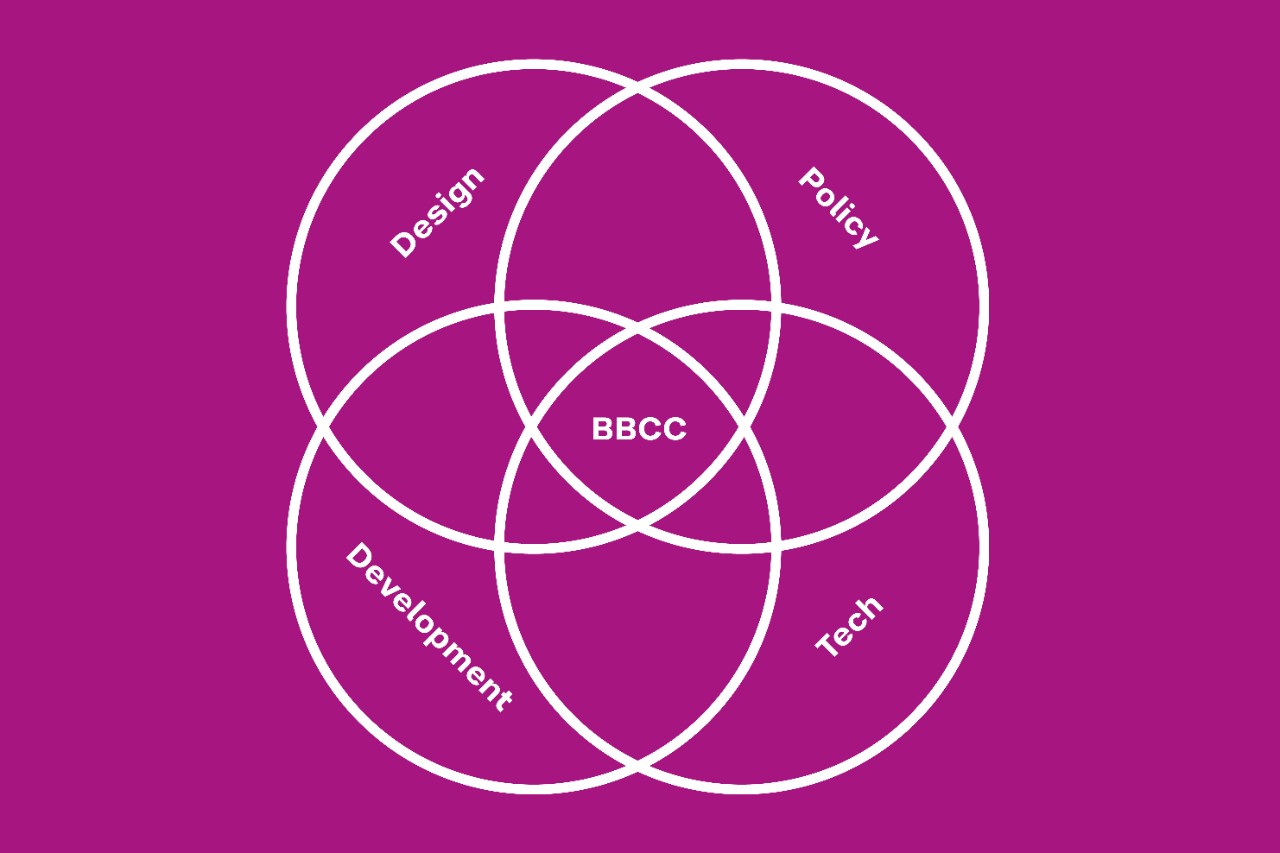
Caption: BBCC exploits opportunities at the intersection of design, development, entrepreneurship, and tech.
Solution
The capacity for this work already exists—but it is scattered. Experienced professionals understand their own fields deeply yet lack structured ways to work beyond them. Organisations face problems no single discipline can solve. New York offers a uniquely rich environment for testing ideas at scale.
BBCC brings these elements together: collaborative where most executive education is individual, applied where academic research is often theoretical, cross-disciplinary where industry R&D tends to be siloed. Fellows remain embedded in their careers while co-developing proposals with peers, faculty, and partners.
The ultimate ambition is to generate ideas that genuinely change how cities work. Each cohort contributes to a growing global network—an evolving community of lifelong learning and lasting urban impact.