$2,896 Per credit
$28,664 Flat rate (10-12 credits)
*For Fall ’26 or Spring ’27. See NYU Bursar site for more info.
Marketing today sits at the intersection of strategy, consumer understanding, analytics, technology, creativity, and execution. The MS in Integrated Marketing at NYU SPS is designed to help students build expertise across those areas while developing the specialized knowledge needed to advance in a rapidly changing profession.
The 42-credit, STEM-designated program combines a strong core curriculum with deeper specialization in Brand and Product Management, Digital Marketing, or Marketing Analytics. Students further shape the degree through electives, experiential learning opportunities, and a choice between an applied Capstone Project or a research-focused Capstone Thesis.
The curriculum reflects how marketing decisions are made today. Students study areas such as consumer behavior, marketing research, digital marketing, data and analytics, artificial intelligence, marketing technology, brand and product strategy, and campaign execution. Throughout the program, the emphasis is on connecting evidence and insight to effective marketing decisions.
Courses are taught by faculty with professional experience across the marketing industry, giving students opportunities to learn from practitioners while applying concepts to contemporary business challenges. Beyond the classroom, students can participate in client-based projects, Marketing Challenges, internships, Real World courses, and Global Field Intensives.
Located in New York City, the program places students in one of the world’s leading centers for marketing, media, technology, finance, fashion, advertising, and communications. With full-time and part-time study options, students can build an academic path that supports their professional goals while gaining the strategic, analytical, and applied skills needed for the next stage of their careers.
Integrated Marketing/Public Relations & Corporate Communication/Executive MS Information Session
Join us for a virtual information session to learn about our MS in Integrated Marketing, MS in PR and Corporate Communication, and Executive MS in Marketing and Strategic Communications. Led by expert clinical faculty, this session explores our graduate programs, offering personalized insights into our curriculum, industry connections, and career pathways, along with a live Q&A.
Wednesday, November 18, 2026 | 7:30 PM until 8:30 PM EST
$2,896 Per credit
$28,664 Flat rate (10-12 credits)
*For Fall ’26 or Spring ’27. See NYU Bursar site for more info.
42 credits
Onsite
Fall or Spring Start
Full-time | Part-time
18 months
See STEM site for more info
job growth 2024-2034
median salary
working and/or in school
Global Division of Programs in Business (DPB) alumni
A broad range of marketing, advertising, and communications careers are open to graduates.
The above data is sourced from Lightcast

Spend one week in Paris or London and a second week in Cannes meeting industry leaders, delving into global marketing and communications, and being immersed in the Cannes Lions International Festival of Creativity. Attend showcases, awards shows, and more.
Learn More About the Paris/London/Cannes Global Field Intensive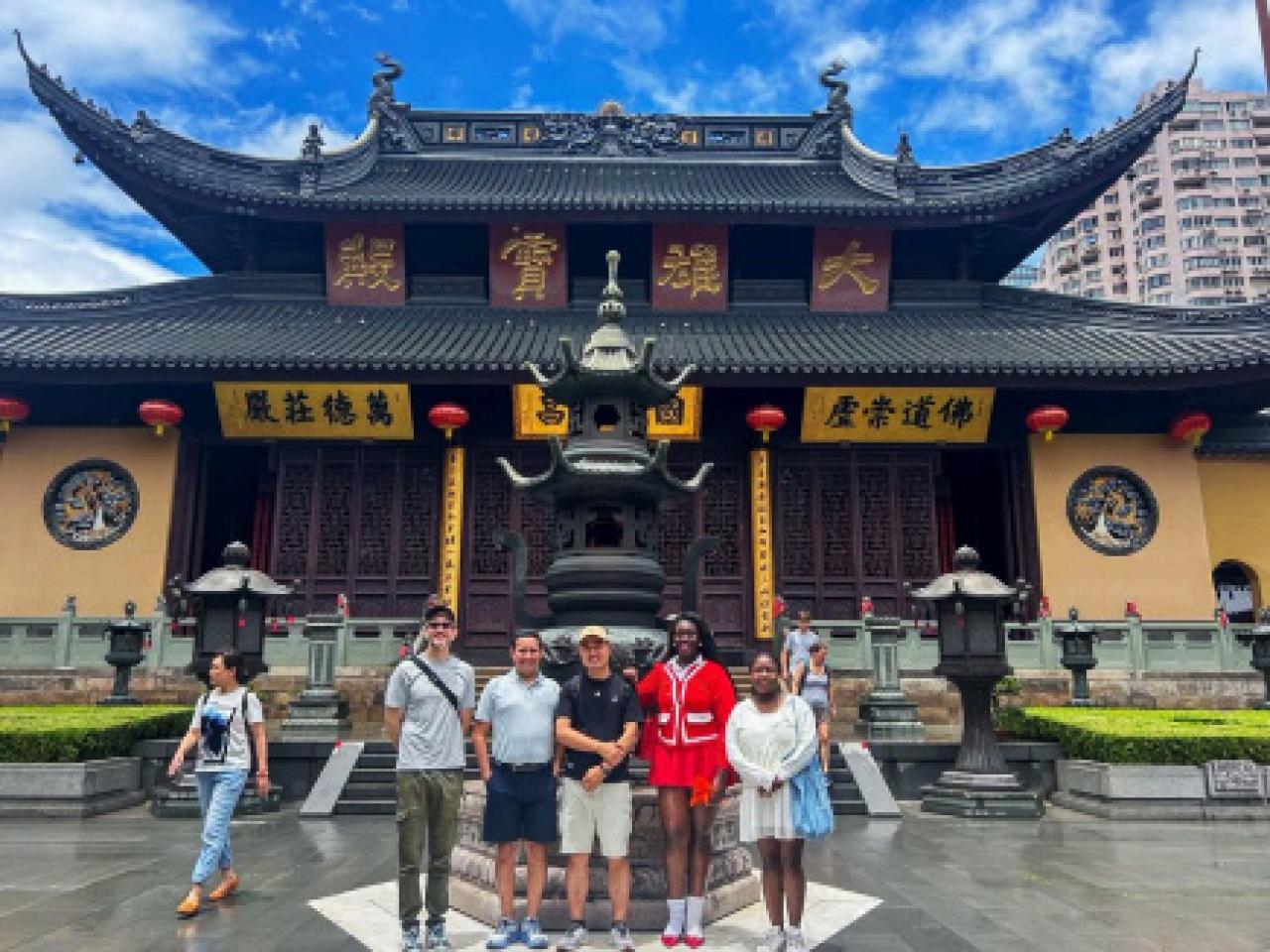
Dive into the world of intelligent retailing in Shanghai. Explore how AI, big data, and IoT transform the shopping experience by bridging the online and offline commerce gap. Engage with industry leaders, visit smart stores, and collaborate on innovative retail strategies that harness the power of digital transformation.
Learn More About the Shanghai Global Field Intensive
Travel to Abu Dhabi, capital of the UAE, the NYU Abu Dhabi campus, and the international hub and port city of Dubai to study luxury marketing from concept to delivery, as well as target segmentation, competitive differentiation, and multicultural marketing.
Learn More About the Abu Dhabi/Dubai Global Field Intensive
Our Real World courses are an interdisciplinary opportunity with graduate students from other business degree programs, bringing their expertise to bear on real marketing problems for a business. Recent clients include Samsung and Porsche.
Learn more About Real World CoursesMeet MS in Integrated Marketing alumni who are leaders in the field and current students poised to impact the future of the industry.
Be proactive, reach out, and build connections that challenge how you think.”

MS in Integrated Marketing
Read Vicky's Story
Be proactive, reach out, and build connections that challenge how you think.”
I was really drawn to the idea of storytelling for brands."

MS in Integrated Marketing
Read Peter's Story
I was really drawn to the idea of storytelling for brands."
Strategy is about understanding people and how they think, which isn’t that different from storytelling.”

MS in Integrated Marketing
Read Liana's Story
Strategy is about understanding people and how they think, which isn’t that different from storytelling.”
[W]hat excites me is that everyone has their own unique story.”

Launching a New Career Chapter
Read Michael's Story
[W]hat excites me is that everyone has their own unique story.”
Whether you’re selling shampoo or software, it’s always about creating an emotional connection."

MS in Integrated Marketing
Read Omar's Story
Whether you’re selling shampoo or software, it’s always about creating an emotional connection."
The professional network I encountered at NYU have continued to be valuable resources."


The professional network I encountered at NYU have continued to be valuable resources."
I like to bring my professional experience into the classroom."


I like to bring my professional experience into the classroom."
It’s incredible to guide students through the same journey I once took."

It’s incredible to guide students through the same journey I once took."
Ultimately, the success of a professor is how well his students end up in their careers."

Ultimately, the success of a professor is how well his students end up in their careers."
Media is changing daily. You need to know what happened yesterday, not last year.”

Court Stroud
Clinical Assistant Professor, Integrated Marketing and Communications
Read Court's Story
Media is changing daily. You need to know what happened yesterday, not last year.”


Integrated marketing brings together strategy, consumer understanding, data, technology, creativity, and execution to create coordinated marketing decisions and experiences. Rather than treating individual channels or disciplines in isolation, integrated marketing considers how they work together to build customer relationships, strengthen brands, and achieve business goals.
An MS in Integrated Marketing is a master's degree program that teaches students how to combine various marketing channels, strategies, tools, and tactics to develop, execute, and measure cohesive, compelling marketing campaigns that drive a positive return on investment. The graduate program prepares students for careers in digital marketing, online marketing, social media marketing, advertising, branding, marketing research and analysis, SEO, SEM, content marketing, email marketing, creative management, and more.
The MS in Integrated Marketing combines the breadth of an integrated marketing degree with the depth of a specialized master’s. Students build a common foundation across strategy, consumer insight, analytics, technology, and marketing decision-making, then develop deeper expertise through a 15-credit concentration, customize the degree with electives, and apply what they learn through client projects, internships, global experiences, and a choice of applied or research-focused capstone. All of this takes place in New York City, where students learn from practitioners working across the industries shaping modern marketing.
The 42-credit MS in Integrated Marketing combines a common marketing foundation with deeper specialization, elective flexibility, and a choice of capstone experiences.
Core Curriculum
Build a strong foundation through 18 credits in Marketing Management, Finance Management, Marketing Research, Database Management and Modeling, Digital Marketing, and Consumer Behavior.
Concentrations
Develop deeper expertise through a 15-credit concentration in Brand and Product Management, Digital Marketing, or Marketing Analytics. Each concentration combines required courses with options that let you shape your area of specialization.
Electives
Customize your degree with 6 credits of electives. With the support of your Academic Advisor, you can deepen your concentration, explore another area of marketing, complete an internship, participate in experiential courses, or prepare for the Capstone Thesis.
Capstone
Complete the program with a 3-credit culminating experience. Choose an applied Capstone Project that integrates research, analytics, and strategy, or a Capstone Thesis focused on rigorous research and scholarly inquiry.
Students choose one of three 15-credit concentrations:
Each concentration includes required courses and a selection of concentration options, allowing students to develop both depth and flexibility within their area of interest.
Yes. Every student has 6 credits of electives, generally two courses selected with the support of their academic advisor. Electives can be used to deepen your specialization, explore courses from another concentration, complete an internship, participate in selected experiential courses, or prepare for the Capstone Thesis.
With advisor approval, students may also be able to take eligible graduate courses in other NYU SPS programs or selected MBA courses at NYU Stern.
Yes. The MS in Integrated Marketing is STEM-designated, reflecting the program’s emphasis on quantitative methods, data and analytics, artificial intelligence, marketing technology, research, and technology-enabled decision-making. The designation applies to students graduating after Fall 2026.
For eligible international students on F-1 visas, graduating from a STEM-designated program may provide the opportunity to apply for a 24-month STEM Optional Practical Training (OPT) extension following the standard period of post-completion OPT. Eligibility for STEM OPT is subject to federal requirements and individual immigration status. Students should consult NYU’s Office of Global Services for guidance regarding their specific circumstances.
Students choose between two 3-credit capstone paths, both completed in the final semester.
The Capstone Applied Project is designed for students who want to integrate research, analytics, strategy, and marketing decision-making into a substantial applied project.
The Capstone Thesis is a research-intensive option for students interested in advanced analytical work, scholarly research, or possible doctoral study. Students choosing the thesis must first complete Research Process and Methodology as an elective.
Both options require students to synthesize what they have learned throughout the program.
The MS in Integrated Marketing combines a common core curriculum with a concentration, electives, and a capstone.
All students complete six core courses:
Students then choose one of three 15-credit concentrations.
Brand and Product Management includes four required courses:
Students also select one concentration option from courses such as Pricing Strategy, Channel and Trade Management, Sales and Account Management, Luxury and Fashion Marketing, Artificial Intelligence Marketing, Business Analytics, and Operations Strategy.
Digital Marketing includes two required courses:
Students select three additional concentration courses from options such as Digital Advertising and Programmatic Strategy, Influencer Marketing, Introduction to MARTECH, Artificial Intelligence Marketing, Business Analytics, Pricing Strategy, Sales and Account Management, and Operations Strategy.
Marketing Analytics includes two required courses:
Students select three additional concentration courses from options including Customer Analytics, Data Visualization Lab, Web Analytics, Customer Experience Management, Artificial Intelligence Marketing, and Introduction to MARTECH.
Students also complete 6 credits of electives and a 3-credit capstone, choosing either the applied Capstone Project or the Capstone Thesis.
Visit our curriculum page for the complete list of courses, concentration options, electives, and course descriptions.
At NYU SPS, you’ll develop skills in marketing strategy, consumer insight, marketing research, data analysis, digital marketing, brand and product management, campaign planning and execution, and marketing performance measurement. You’ll also learn to use analytics, emerging technologies, and AI to inform marketing decisions and translate data and research into actionable strategies. Through concentrations in Brand and Product Management, Digital Marketing, and Marketing Analytics, you can build deeper expertise aligned with your career goals.
Yes. Students may choose an internship as part of the elective portion of the degree. An internship can provide professional experience related to a student's career goals while allowing classroom learning to be applied in a workplace setting.
Because the internship is an elective rather than a required component of the degree, students can decide with their advisor whether it is the best use of their elective credits.
Students can extend their learning beyond the classroom through experiences such as client-based marketing projects, Real World courses, Marketing Challenges, and Global Field Intensives.
These opportunities may involve solving a marketing problem for an organization, developing and presenting a marketing plan, working across disciplines, or studying marketing and business practices in international markets.
Applicants need to submit a transcript showing completion of a Bachelor's degree, a resume, statement of purpose, and one letter of recommendation from an academic or professional source. We don’t require GMAT nor GRE scores. Visit our Graduate Admissions page for more information on admissions requirements.
NYU SPS does not have a minimum GPA requirement for admission into the MS in Integrated Marketing program. Our holistic application review process considers various aspects of an applicant's profile.
Yes, you can pursue a master's in marketing degree without a bachelor’s degree in marketing. Many top colleges and universities with graduate programs in marketing, including New York University School of Professional Studies, are designed to accommodate students from diverse academic backgrounds.
A master's in marketing degree usually takes up to two years to complete, depending on the program and your own pace. Our program can be completed in 18 months.
Graduates of our master’s degree in integrated marketing program often pursue careers in digital marketing, online marketing, advertising, social media marketing, branding, and more. They go on to build careers wherever smart strategy meets real-world impact. This program prepares you to step into high-impact marketing roles across industries—from finance and technology to fashion, media, consumer goods, advertising agencies, and global nonprofits—and achieve your career goals.
Our alumni work at leading organizations including American Express, Citigroup, Coca-Cola, IBM, Microsoft, L’Oréal, Ralph Lauren, GroupM, OMD Worldwide, Nielsen, Tencent, the United Nations, and more, both in New York City and around the world.
They hold roles such as Brand Manager, Marketing Manager, Marketing Data Analytics Manager, Media Planner, Product Manager, Account Manager, PR Lead, Social Media Strategist, and Web Content Editor.
The program costs $28,664 Flat rate (10-12 credits) for full-time students and $2,896 per credit for part-time students for Fall ’26 or Spring ’27. See NYU Bursar site for more info.
Yes, scholarships and financial aid are available. Visit our Graduate Tuition & Financial Aid page for the most up-to-date information on tuition, scholarships, grants, and financial aid.
Marketing managers earn a median annual salary of $161,030 in the United States, according to the U.S. Bureau of Labor Statistics. While salaries can vary, they’re consistently strong, especially for professionals working in major markets like New York City where marketing manager salaries range from $115,193 - $165,405 according to salary.com.
Compensation is influenced by experience, level of responsibility, industry, company size, and location, with NYC-based roles often commanding higher salaries due to the higher cost of living and concentration of global brands, agencies, and media companies demanding top talent.
Marketing Directors earn between $102,243 and $182,423 per year (or $135,652 per year on average) in the United States, while those in New York City earn between $117,224 and $199,621 per year (or $152,049 per year on average), according to Glassdoor.
Build a degree that combines a strong marketing foundation with specialization, flexibility, technology, and applied experience.
Choose from Three Concentrations
Develop deeper expertise in Brand and Product Management, Digital Marketing, or Marketing Analytics through a 15-credit concentration tailored to your interests and career goals.
Customize Your Degree
Use 6 credits of electives to deepen your specialization, explore another concentration, complete an internship, pursue experiential learning, or prepare for the Capstone Thesis.
Build Analytics and Technology Skills
Develop experience with data, analytics, AI, marketing technology, research, and measurement while learning how to apply them to marketing decisions and strategy.
Learn from Marketing Practitioners
Study with faculty whose professional experience spans marketing strategy, analytics, digital marketing, branding, communications, technology, and related fields.
Apply What You Learn
Work on client challenges, participate in Real World courses and Marketing Challenges, pursue internships, and explore global marketing through Global Field Intensives.
Choose Your Capstone Path
Complete the degree with either an applied Capstone Project focused on a marketing challenge or a research-intensive Capstone Thesis designed for deeper scholarly inquiry.
Yes, a master’s in integrated marketing is worth it for marketers who want advanced marketing skills, leadership roles, and a higher salary. At NYU SPS, the value comes from more than the marketing degree itself. You’re learning in New York City, alongside working professionals, taught by industry practitioners, and connected to one of the world’s strongest alumni networks. Graduates leave with:
A master’s in marketing provides specialized, in-depth study of marketing, while an MBA offers a broader education across multiple business functions. In the MS in Integrated Marketing at NYU SPS, students develop expertise in areas such as marketing strategy, consumer behavior, digital marketing, brand and product management, marketing analytics, research, and emerging technologies. An MBA typically combines marketing with areas such as finance, accounting, operations, organizational management, and strategy.
For students who know they want to build their careers in marketing or related fields, the MS in Integrated Marketing provides the opportunity to develop greater depth in the discipline.
Brand and product management focuses on building, growing, and managing brands and products over time. It brings together brand strategy, consumer understanding, product and portfolio decisions, campaign leadership, pricing, channels, and commercial performance. Brand and product managers work across functions to ensure that marketing strategy supports both customer needs and business goals.
The best degree for brand and product management typically includes a combination of marketing, business administration, and specialized courses in brand strategy, consumer behavior, and operations strategy. These facets are baked into our core courses and Brand and Product Management concentration courses.
You study a variety of topics that contribute to building, maintaining, and enhancing a brand's image and equity. Some key topics include brand and operations strategy, product management, consumer behavior, and marketing research.
The Brand and Product Management concentration prepares you to manage brands and products from strategy through execution. You’ll develop skills in brand positioning and equity, product and portfolio management, consumer insight, and integrated campaign planning and management.
You’ll also learn to connect brand and product decisions with broader business considerations such as pricing, channels, sales, analytics, and market performance. Depending on the concentration options you select, you can deepen your knowledge in areas such as Pricing Strategy, Channel and Trade Management, Sales and Account Management, Luxury and Fashion Marketing, Artificial Intelligence Marketing, Business Analytics, and Operations Strategy.
A brand manager develops short- and long-term plans across multiple dimensions of marketing and communications to ensure the financial health, positive reputation, and growth of a company's brand and/or its branded products and services. A brand manager has input into or directly drives strategies and tactical plans across product innovation, media placement, creative and messaging, brand portfolio and assortment, and consumer insights, among other critical functions.
This concentration is a strong fit for students who want to take a broad view of how brands and products compete and grow. It is particularly well suited to students who enjoy combining strategy, consumer insight, creativity, analytics, and commercial decision-making.
Students interested in coordinating the work of creative, media, sales, research, and operational teams may find this concentration especially relevant.
Becoming a brand manager involves a combination of relevant education, gaining experience in marketing roles, and developing skills in brand strategy, consumer research, and campaign management. Brand managers combine a deep understanding of the financial and operational needs of a business, a keen sense of consumer needs and behaviors, and the competitive context for the products and services they offer. A grounding in competitive strategy, the language of business and marketing management, and experience translating market intelligence into actionable marketing and communications plans are foundational.
The concentration can prepare students for marketing functions such as:
Specific roles and career progression will depend on a student’s previous experience, interests, and professional goals.
Digital marketing uses digital channels, platforms, technologies, and data to reach and engage customers and support business goals. It includes areas such as social media, e-commerce, digital advertising, influencer marketing, marketing technology, and performance measurement.
Effective digital marketing combines strategy, creativity, technology, and analytics to understand audiences, manage customer experiences, measure results, and improve marketing performance.
At NYU SPS, we teach digital marketing as a core, real-world discipline—one that blends strategy, creativity, and data in the way the industry actually operates. You’ll learn how to plan campaigns, develop messaging, and make decisions based on performance data—testing, optimizing, and adapting in real time. Courses emphasize practical experience, giving you the opportunity to work with the technology, tools, and platforms used by today’s marketing teams.
The Digital Marketing concentration prepares you to plan, execute, measure, and optimize marketing across the digital ecosystem. You’ll develop skills in social media strategy, e-commerce, digital campaign planning, audience engagement, and performance measurement.
Through concentration options, you can also build expertise in areas such as digital advertising and programmatic strategy, influencer marketing, marketing technology, artificial intelligence, business analytics, pricing, sales and account management, and operations strategy.
The concentration emphasizes both the strategic decisions behind digital marketing and the technologies and platforms used to put those decisions into practice.
Training and education include learning how to design, plan, set up, manage, measure, and optimize marketing campaigns using digital tools, alongside a deeper understanding of how to craft a qualitative and quantitative insight-driven strategy drawing on consumers' online behaviors across devices.
Yes, students can incorporate marketing technology and artificial intelligence into their concentration through courses such as Introduction to MARTECH and Artificial Intelligence Marketing.
These courses explore how marketers use technology, automation, analytics, and AI-enabled tools to support activities such as customer engagement, targeting, personalization, measurement, and marketing decision-making.
Because these are concentration options, the specific technologies and topics a student studies will depend on the courses selected.
Digital marketers earn an average salary of $77,381 per year in the U.S. and $84,657 per year in New York City, according to ZipRecruiter. Salaries vary based on factors like experience, job title, level of responsibility, location, industry, and company size. For example, Digital Marketing Managers earn between $98,649 and $140,124 per year (or an average salary of $115,279 per year), Digital Marketing Senior Managers earn between $150,983 and $186,660 per year (or an average salary of $165,760 per year), and Digital Marketing Directors earn between $165,050 and $237,439 per year (or an average salary of $203,374 per year), according to salary.com.
A master's in marketing with a concentration in Digital Marketing provides students with deep, specialized marketing skills, knowledge, and practical experience, while an MBA in Digital Marketing develops business skills and leadership with advanced strategy, finance, and management training alongside digital marketing expertise.
Yes, digital marketers are in high demand. The U.S. Bureau of Labor Statistics projects a 6% employment growth rate for marketing, advertising, and promotions managers through 2034, which is faster than the 3% average employment growth rate projected for all occupations. They also project about 36,400 openings for advertising, promotions, and marketing managers each year over the decade.
The concentration can prepare students for marketing functions such as:
Specific roles and career progression will depend on a student’s previous experience, interests, and professional goals.
Yes, digital marketing is a good career because it offers strong demand, competitive salaries, flexibility, diverse roles, and growth opportunities. For example, digital marketers can specialize in SEO, SEM, paid media, social media marketing, content marketing, email marketing, influencer marketing, affiliate marketing, conversion rate optimization, or analytics, and advance into manager, director, VP, and CMO roles.
Marketing analytics is the use of data, analytical methods, and measurement to understand customers, evaluate marketing performance, and support better marketing decisions. It can include customer analysis, experimentation, predictive modeling, digital analytics, segmentation, lifetime value analysis, and data visualization.
Marketing analytics helps organizations move from data to actionable insights that can inform marketing strategy, targeting, customer engagement, and resource allocation.
The Marketing Analytics concentration develops analytical, technical, and strategic skills for turning marketing data into decisions. You’ll learn to integrate and analyze data, apply statistical and analytical methods, design and interpret experiments, and communicate findings clearly.
Depending on the concentration options you select, you can develop additional expertise in areas such as Customer Analytics, Data Visualization, Web Analytics, Customer Experience Management, Artificial Intelligence Marketing, and marketing technology.
The concentration also emphasizes the ability to translate analytical findings into recommendations that marketing and business decision-makers can use.
Through a combination of coursework and practical learning opportunities, you’ll gain skills in:
This concentration is a strong fit for students who are curious about why customers behave the way they do and want to use data and evidence to answer marketing questions.
It is particularly relevant for students interested in measurement, experimentation, customer insights, modeling, and data-informed decision-making. It can also be a good fit for students considering the Capstone Thesis or research-oriented marketing careers.
The best degrees for marketing analytics build skills in marketing, data analysis, consumer behavior, and performance measurement. Students aiming to become a marketing analyst typically pursue degrees in the following fields of study:
The concentration can prepare students for marketing functions such as:
Specific roles and career progression will depend on a student’s previous experience, interests, and professional goals.
Yes, marketing analytics is a good career. It offers strong job growth, competitive salaries, and opportunities to make a significant impact on business success. As organizations increasingly rely on data-driven decision-making, marketing analysts play an important role in shaping effective marketing strategies that drive revenue. Market research analysts are projected to see a job growth of 7% through 2034, which is faster than the 3% average for all occupations, according to the U.S. Bureau of Labor Statistics. Additionally, the average marketing analytics salary is $94,807 per year, with top earners making $143,000, according to ZipRecruiter.
A marketing analyst helps companies understand how their marketing efforts are performing so they can improve their marketing efforts, attract and retain more customers, increase revenue and profits, and optimize spend. Marketing analysts typically do the following: